Lezorqaluto: Structured Review of Information and Observations
A purposefully designed service for examining organised data, reviewing patterns across structured observations, and navigating information clearly — built to support thoughtful review rather than surface-level access.
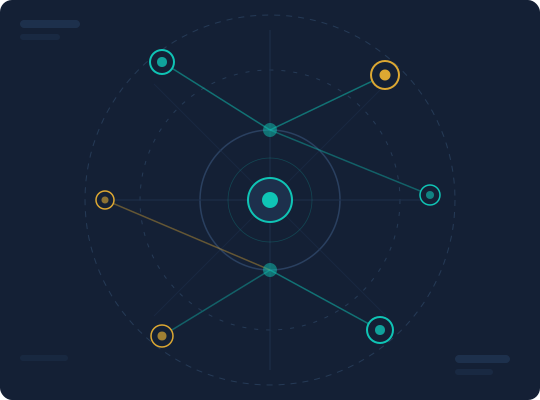
Organised Information Architecture
Lezorqaluto arranges incoming information into a navigable structure, allowing users to locate and review specific observations without sorting through unstructured content.
Pattern-Aware Examination
The service surfaces relationships and recurring elements within structured datasets, helping users identify what is consistent, variable, or worth closer inspection.
Readable Output Presentation
Reviewed observations are presented in a clear, readable format. The interface avoids clutter and prioritises legibility across different kinds of structured information.
A Service Built Around Reviewing, Not Just Accessing
Many information tools prioritise retrieval — finding a record and displaying it. Lezorqaluto takes a different approach. The service is designed around the act of examination: understanding what a set of observations means, how individual data points relate, and what patterns emerge when information is viewed as a whole.
Users engage with the service through an interface designed for clarity. Rather than presenting raw outputs, the system organises information into reviewable layers, allowing each element to be understood in context.
Read about the platform
Areas the Service Addresses
Lezorqaluto covers a range of information-review scenarios, each supported by interface components designed for its specific purpose.
Observation Review
Browse and examine individual data observations in context, with neighbouring records and relevant groupings visible at the same time.
Pattern Mapping
Identify recurring themes and relationships across grouped observations. The interface highlights structural similarities without overstating what they mean.
Grouped Classification
Data is sorted into meaningful categories before it reaches the user, reducing the effort required to locate and compare related records.
Sequential Examination
Follow observation sequences over time or across ordered datasets. The interface preserves ordering context so progression is visible and meaningful.
How Information Moves Through the System
Lezorqaluto receives structured information, organises it according to its internal classification system, and makes it available through the review interface. Each stage is designed to preserve the integrity of the original data while making it more navigable.
The service does not alter or interpret information beyond what is required to present it clearly. Users retain the ability to draw their own conclusions from what they examine.
View interface capabilities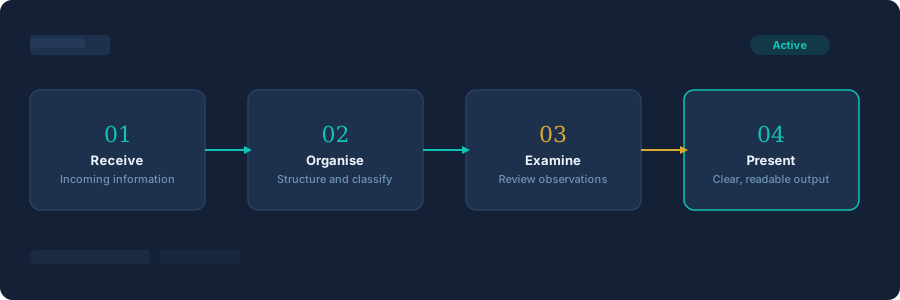
The Platform
Understand what Lezorqaluto is designed to do, how its scope is defined, and what users should know before requesting access.
Interface Capabilities
A detailed look at the tools and review mechanisms the Lezorqaluto interface provides, explained in practical terms.
Submit an Enquiry
Reach the Lezorqaluto support team with an access request or a question about the service and its review environment.